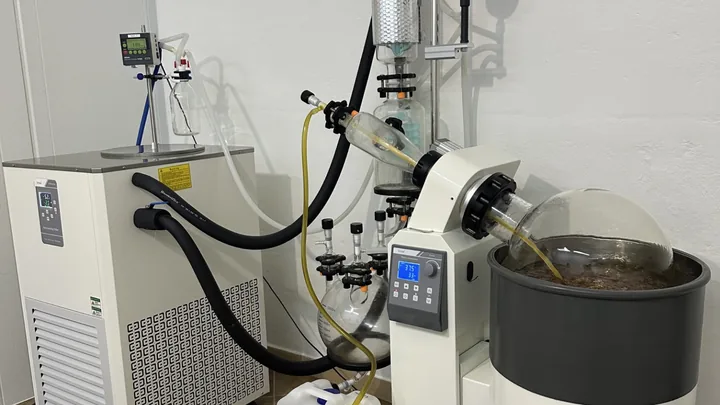
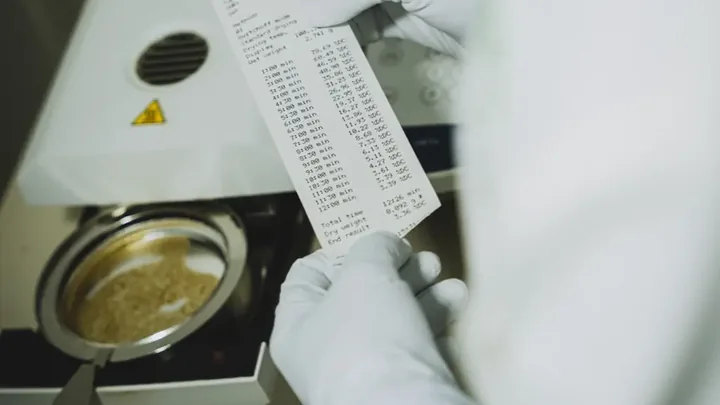
Vacuum distillation (rotovap)
Ultrasonic probe
INDEPENDENT TESTING • FINAL CONCENTRATE • PUBLICLY AVAILABLE RESULTS

Heavy metal analysis - Pb, Cd, Hg, As

Our tinctures are concentrated extracts, so the content of Pb, Cd, Hg and As is checked in the final concentrate. The analysis is carried out in an accredited external laboratory.

Quality & transparency

Heavy metals – final concentrate analysis

Our tinctures are concentrated extracts, which are further vacuum concentrated after extraction.

Heavy metals are therefore analysed in the final, concentrated product, where potential values are the highest. This approach provides a conservative and realistic assessment of quality.

Tested: final product Standard: ISO/IEC 17025 Method: ICP-OES mg/kg = ppm

Analysis results

The values shown are the measured results for a representative analysed batch of each mushroom. The analysis is performed on the final concentrate. Certificates for individual batches (COA) are available below.

Reishi (Ganoderma lucidum) – concentrated extract

Final concentrate ICP-OES mg/kg (ppm)

Lead (Pb) mg/kg
0,011
Very low
Reference limit (EU): 3,0 mg/kg
≈ 273× below the EU limit
Cadmium (Cd) mg/kg
0,021
Very low
Reference limit (EU): 1,0 mg/kg
≈ 48× below the EU limit
Mercury (Hg) mg/kg
< 0,0010
Below the detection limit
Reference limit (EU): 0,10 mg/kg
≥ 100× below the EU limit
Arsenic (As) mg/kg
< 0,010
Below the detection limit
In accordance with current legislation for food supplements

The analysis of the final concentrate was performed in an accredited laboratory (ISO/IEC 17025) using the ICP-OES method.

Certificates of analysis (COA)

Official laboratory reports for the displayed batches.

Additional explanations

Where do heavy metals in mushrooms come from?
Mushrooms naturally absorb minerals and elements from their environment – from wood, soil or water. Because heavy metals are also present in trace amounts in nature, the raw material may contain them as well. In the production of medicinal mushroom tinctures we therefore carefully control the origin of the substrate and perform analyses in an accredited laboratory to verify the composition of the final product.
Why can they be problematic?
With long-term exposure to higher quantities, some heavy metals may accumulate in the body. For this reason legislation sets strict maximum limits for foods and food supplements. These limits include a large safety factor and ensure safe use during normal consumption of products such as medicinal mushroom tinctures.
How do these results compare to everyday food?
In many common foods – for example vegetables, grains or fish – trace amounts of elements such as lead, cadmium or arsenic are also present. The measured values in the analysed extracts are several dozen times below the legal limits for food supplements. The analysis is performed on the final concentrate, so it provides a realistic assessment of the composition of the final product.
Does every batch have its own certificate?
Heavy metal analyses are performed periodically (at least once per year) and whenever there are major changes in the raw material or the technological process. Mushrooms are cultivated on controlled substrates, and the production process takes place with consistent equipment maintenance and hygiene standards. Testing is carried out by an accredited laboratory, and the results refer to the final concentrate or final product that the user actually consumes. The published certificates of analysis (COA) confirm the stable and low heavy metal content in our extracts.